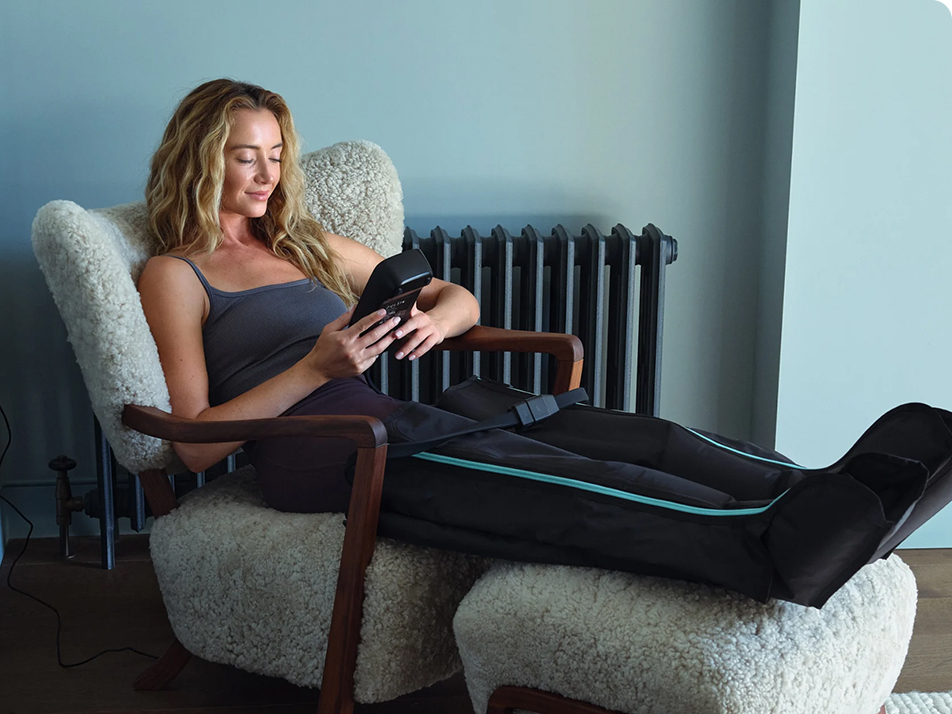
Que vous ayez marché toute la journée, fait du shopping pendant des heures ou dansé jusqu'au bout de la nuit, cet appareil de massage pour les jambes et les pieds vous soulage instantanément. Il cible les muscles fatigués grâce à un pétrissage profond et une compression apaisante, vous aidant ainsi à vous détendre et à récupérer rapidement. Un indispensable pour toutes celles et ceux qui passent beaucoup de temps debout et recherchent un confort quotidien à la maison.
Mabu - PDG de RisingBamboo
European buyers insist on a cordless massager with CE certification for the following core reasons, which are rooted in legal compliance, operational risk control, consumer safety, and market access rules across the European Economic Area (EEA):
It is a non-negotiable legal mandatory requirement
CE marking is the legally binding market access passport for all electronic and electrical products sold in the 27 EU member states, plus Iceland, Norway, and it is also recognized in the UK post-Brexit . For cordless massagers, this is not an optional quality badge:
Battery-powered massage devices fall under the scope of EU harmonized regulations, and must meet three core mandatory directives: the Low Voltage (LVD) 2014/35/EU, Electromagnetic Compatibility (EMC) 2014/30/EU, and RoHS 2.0 directives. If the product has Bluetooth, Wi-Fi or other wireless functions, it must additionally comply with the RED (Radio Equipment) 2014/53/EU directive .
No CE marking means the product has no legal basis for circulation in the EEA. It is explicitly prohibited to place non-compliant massage devices on the European market.
Avoids catastrophic customs and market enforcement risks
European customs and e-commerce platforms have drastically tightened CE compliance checks for consumer electronics in recent years, and non-certified cordless massagers face almost certain severe penalties:
Heavy fines and forced recalls: Non-compliant products will be ordered fully withdrawn from the market, and distributors can face fines that far exceed the value of the goods. Serious violations will land the buyer on the EU non-compliant product blacklist, leading to multi-year strict customs inspections for all their subsequent imports, which can cause millions in direct economic losses .
Platform account bans: All major European e-commerce channels including Amazon, TEMU, SHEIN and AliExpress now require valid CE documentation to list massage products. Without it, listings will be immediately removed, and seller accounts risk suspension .
Guarantees product safety and eliminates consumer liability risks
CE certification for cordless massagers is built on strict, product-specific safety standards that directly protect end users, and shield buyers from costly product liability claims:
Electrical safety: It must pass tests under EN 60335-1 (general household appliance safety) and EN 60335-2-32 (special safety rules for massage appliances), verifying that insulation performance, anti-shock protection, and surface temperature control are all within safe limits, to prevent electric shocks, burns, or fire hazards from the built-in lithium battery .
Electromagnetic compatibility: Tests under EN 55014-1/2 ensure the cordless massager will not emit dangerous electromagnetic interference that disrupts phones, medical devices or household appliances, and will not malfunction unexpectedly when exposed to external electromagnetic fields .
Hazardous substance control: RoHS 2.0 testing strictly limits the content of lead, mercury, cadmium and 6 restricted phthalates in the product, preventing long-term health risks for users who have direct skin contact with the massager for extended periods .
Eliminates cross-border trade technical barriers
A CE-marked cordless massager can be freely sold and circulated across all EEA countries, without needing to complete separate, duplicate safety assessments for each individual European national market . This saves buyers huge amounts of extra certification costs, logistics delays and administrative work, and allows them to deploy their inventory across the entire European market without regional restrictions.
In short, for European buyers, a cordless massager without valid CE certification is not just "non-compliant" — it is a high-risk product that cannot be legally imported, sold, or resold, and will expose their entire business to avoidable legal, financial and reputational damage.